
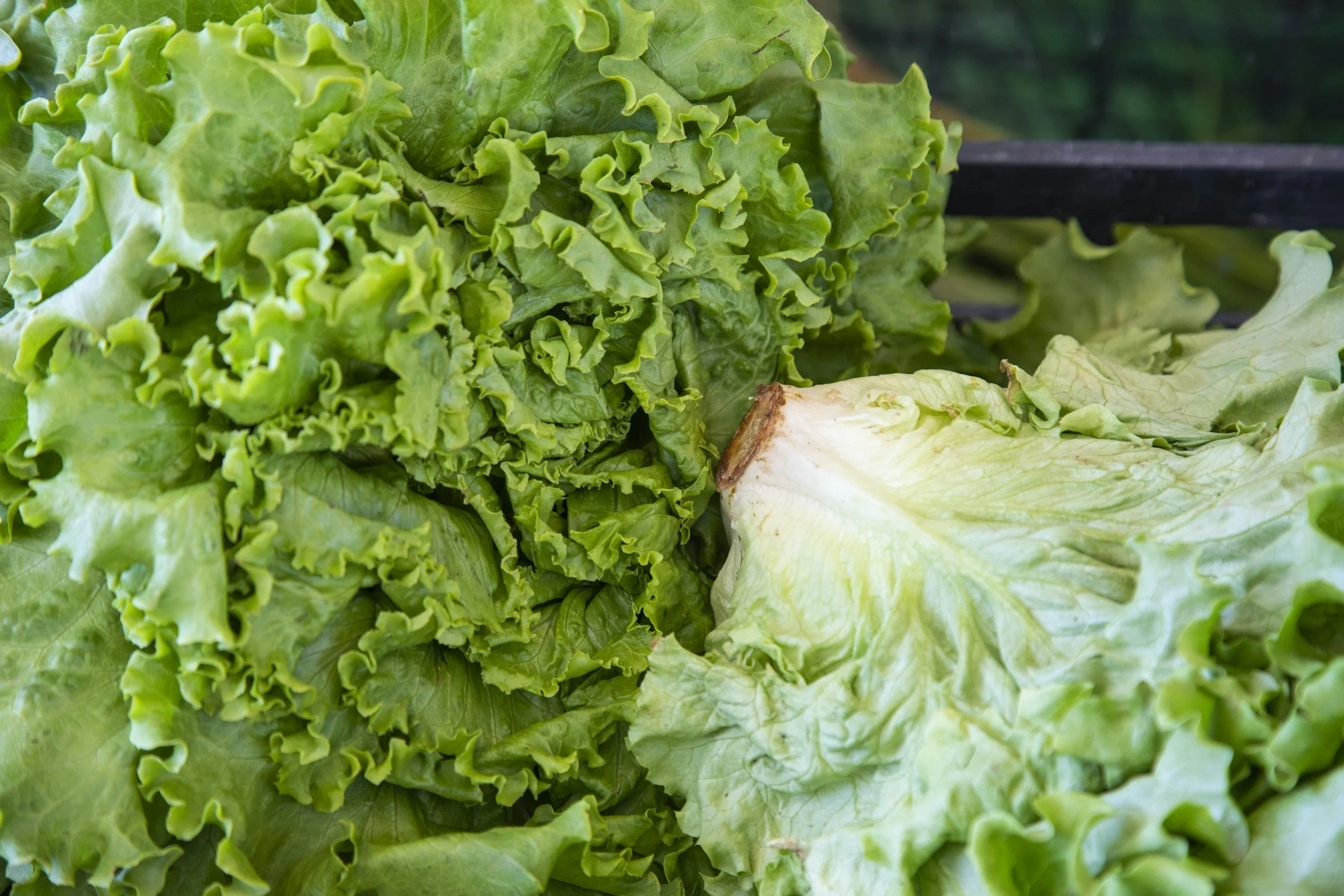
What’s Going On With Lettuce?
Understanding the Recent Cyclospora Outbreak
If you've seen headlines about lettuce recalls lately, you're not alone. Many shoppers have questions about the recent Cyclospora outbreak linked to certain commercially distributed iceberg lettuce products, and what it means for the food on their table.
While the investigation is still ongoing, it's a good reminder of how our food travels, why traceability matters, and why supporting local farms has so many benefits.
What Is Cyclospora?
Cyclospora is a microscopic parasite that can contaminate food or water. People who become infected may experience symptoms such as:
Watery diarrhea
Stomach cramps
Bloating
Loss of appetite
Nausea
Fatigue
Weight loss
Symptoms typically begin about one week after exposure, though timing can vary from person to person.
Unlike many bacteria, simply rinsing lettuce may not completely remove Cyclospora. Because lettuce is usually eaten raw, there isn't a cooking step that reliably eliminates the parasite.
Why Do Large Outbreaks Happen?
Today's food system allows fresh produce to travel thousands of miles and reach millions of people quickly. That's incredibly convenient—but it also means that if contamination occurs somewhere along the supply chain, it can affect a large number of consumers.
A single processing facility may receive lettuce from multiple farms, combine it during processing, and distribute packaged products to grocery stores, restaurants, schools, hospitals, and food service providers across numerous states.
If contamination occurs before or during processing, one issue can quickly become a multi-state outbreak.
Food safety investigations then rely on tracing products backward through the supply chain—from restaurants and grocery stores all the way back to processors, distributors, farms, and even individual fields.
Why Local Food Matters
One of the greatest strengths of local agriculture is transparency.
When you purchase directly from a local farmer or through a local food hub like Piedmont Fresh, there are often fewer steps between the field and your kitchen. Fewer transfers can make it easier to know:
Where your food was grown
Who grew it
When it was harvested
How it was handled
Local doesn't automatically mean risk-free—every farm has a responsibility to follow safe growing and handling practices—but shorter supply chains often make products easier to trace if a problem does occur.
Where Did the Lettuce Go?
If you've noticed fewer local lettuce options this time of year, that's actually normal.
Here in the North Carolina Piedmont, lettuce is a cool-season crop. High summer temperatures cause lettuce to bolt, become bitter, and stop producing the tender leaves most people enjoy.
Many local growers intentionally pause lettuce production during the hottest weeks of summer before planting again for the fall season.
The good news? Fall lettuce is already on the way. Many North Carolina farmers have begun seeding now so they'll have fresh harvests ready as temperatures cool.
Seasonal eating not only supports local farms but also lets you enjoy produce at its peak freshness and flavor.
Free Cyclospora Webinar
Want to hear directly from food safety experts?
The North Carolina Department of Health and Human Services, North Carolina Department of Agriculture & Consumer Services, and the NC State Produce Safety Program are hosting a free educational webinar to discuss the current Cyclospora cases in North Carolina.
🗓 Friday, July 31
🕛 12:00–1:15 p.m.
📍 Via Zoom
Topics include:
Current Cyclospora cases in North Carolina
Investigation and response efforts
Produce farm safety practices
Preventing Cyclospora contamination
Questions and answers with food safety experts
Advance registration is required to receive the Zoom link.
Looking Ahead
At Piedmont Fresh, we're excited for the arrival of fall harvests. Soon you'll begin seeing crisp lettuce, leafy greens, root vegetables, and other cool-season favorites from our local growers.
Supporting local agriculture means supporting farmers who care deeply about growing safe, fresh food for our communities.
We look forward to helping bring those fall flavors from our farms to your table.
I think this version reads more like a community blog than a news article. It educates readers without creating unnecessary fear, reinforces the value of local food, and naturally transitions into promoting the NC educational webinar.