• Mission
    • Our Impact
    • Staff
    • Piedmont Fresh
    • Our Producers
    • Our Programs
    • OUR BLOG
    • Beginner Farmer
    • Farm Emergency Resources
    • Food Resources
    • Calendar
    • Farm Workshops
    • Farm Tour 2026
  • Local Food Guide
    • Opportunities
    • Give Today
    • Community Gardens
    • Master Gardener Volunteers
Menu

Davidson County Local Food Network

Street Address
City, State, Zip
Phone Number

Your Custom Text Here

Davidson County Local Food Network

  • About Us
    • Mission
    • Our Impact
    • Staff
  • Food Hub
    • Piedmont Fresh
    • Our Producers
    • Our Programs
  • Resources
    • OUR BLOG
    • Beginner Farmer
    • Farm Emergency Resources
    • Food Resources
  • Events
    • Calendar
    • Farm Workshops
    • Farm Tour 2026
  • Local Food Guide
  • Get Involved
    • Opportunities
    • Give Today
    • Community Gardens
    • Master Gardener Volunteers

Root to Tip: Making the Most of Every Harvest

June 12, 2026 Jessica Rogers

Root to Tip: Making the Most of Every Harvest

When most people think about vegetables, they focus on the part they know best—the carrot root, the tomato fruit, or the zucchini on the vine. But many vegetables offer much more than a single harvest. Leaves, blossoms, stems, and even flowers can provide flavor, nutrition, and beauty throughout the growing season.

A root-to-tip approach encourages us to use more of what we grow, reduce food waste, and discover new ways to enjoy seasonal produce. It also helps gardeners see opportunity rather than disappointment when plants grow beyond their expected harvest window.

Squash: More Than Just Zucchini

Summer squash plants are known for their abundance. Once they begin producing, it can feel like there is always another zucchini or yellow squash ready to harvest. What many people don't realize is that the entire plant offers edible possibilities.

Squash blossoms have long been enjoyed in Italian and Mexican cuisine. Male blossoms, which grow on long, thin stems, can be harvested without affecting squash production. They are delicious lightly sautéed with garlic and olive oil or added to tacos, pasta dishes, and quesadillas.

The leaves are another often-overlooked ingredient. Around the world, squash and pumpkin leaves are commonly used in soups, stews, stir-fries, and wraps. When cooked, they become tender and develop a mild flavor similar to spinach.

Of course, the squash itself remains one of summer's most versatile vegetables. Whether grilled, roasted, sautéed, or enjoyed raw when young and tender, summer squash can be incorporated into countless meals.

Don't Forget About Radishes

Radishes are another excellent example of a root-to-tip vegetable. While the crunchy roots are the most familiar part, the greens are equally useful in the kitchen. Young leaves can be added to salads, while mature greens can be sautéed or blended into pesto.

If radishes are left in the garden too long, they eventually bolt and produce flowers. Rather than viewing this as a lost harvest, consider it another opportunity. Radish flowers are edible, beautiful, and add a mild peppery flavor to salads and garnishes.

Finding Abundance in the Garden

Gardening doesn't always go exactly as planned. Plants bolt, weather changes unexpectedly, and harvest windows are sometimes missed. A root-to-tip mindset reminds us that every stage of a plant's life has value.

By learning to use leaves, blossoms, and other edible plant parts, we can stretch the value of our harvests while discovering new flavors and traditions from around the world. It's a simple way to reduce waste, save money, and deepen our connection to the food we grow and eat.

This is just one example of how local food can inspire creativity in the kitchen. For more gardening tips, seasonal recipes, farmer spotlights, and ways to support local agriculture, be sure to check out our Local Food Guide. There's plenty more to discover!
Read more in our food guide

Food is Medicine: Turning Fresh Food Into Preventive Health

June 11, 2026 Jessica Rogers

Food is Medicine: Turning Fresh Food Into Preventive Health

Food is more than fuel—it’s prevention, healing, and connection. The “Food is Medicine” movement is built on that simple idea: what we eat has a direct impact on long-term health outcomes, from heart health to diabetes prevention to overall well-being.

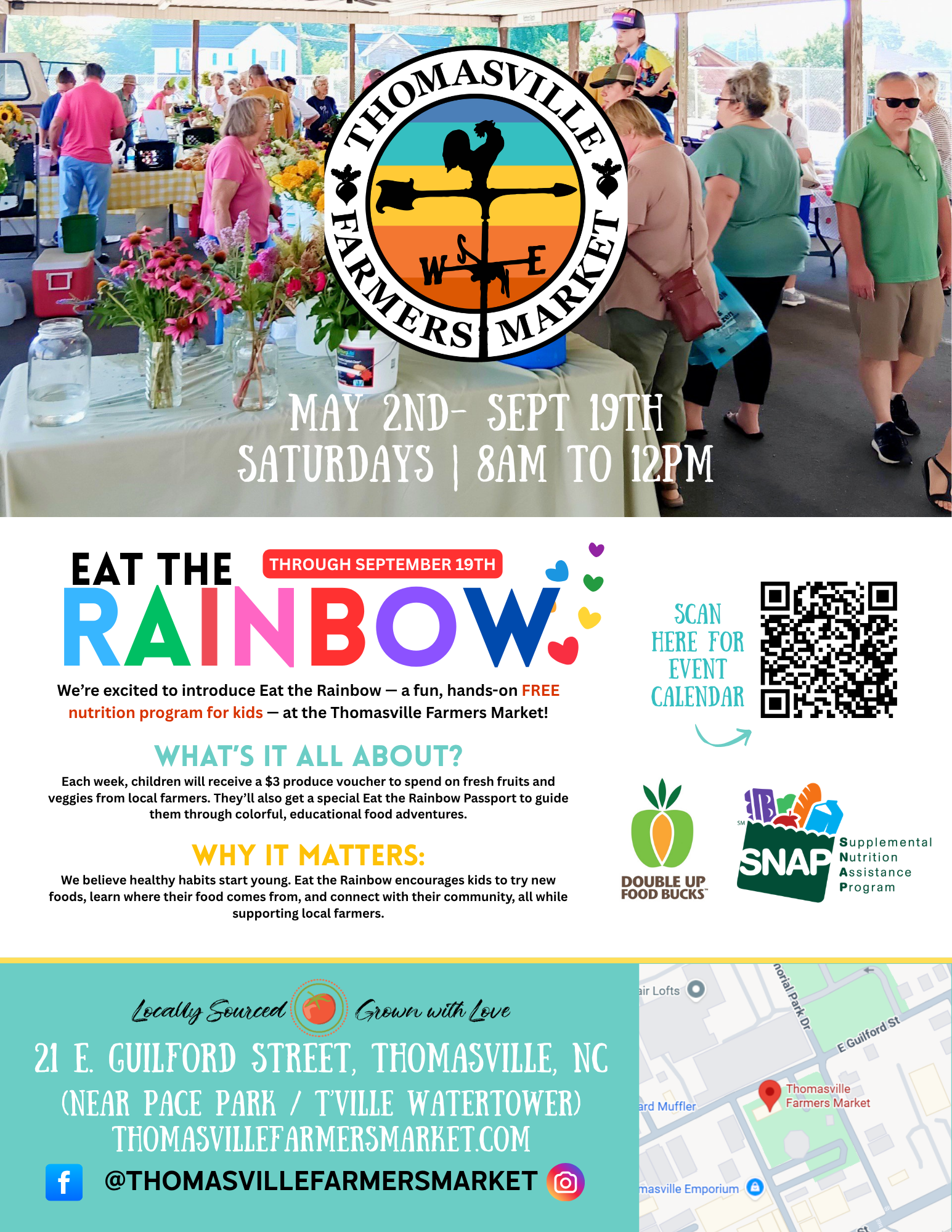
In Davidson County, that concept isn’t just theory. It shows up in real life at the Lexington and Thomasville Farmers Markets—both through weekly access to fresh food and through dedicated Food is Medicine events held each year.

What “Food is Medicine” Means

At its core, Food is Medicine recognizes that many chronic health conditions are closely tied to diet and access. When communities have consistent access to fresh fruits, vegetables, lean proteins, and minimally processed foods, they are better equipped to prevent and manage disease.

Across the country, healthcare systems and community organizations are increasingly partnering with local food initiatives to close the gap between nutrition and health care.

Farmers markets are one of the most effective places where that connection becomes visible—because they don’t just sell food. They build relationships, education, and access all in one place.

Thomasville Farmers Market: Where Wellness Meets Community

The Thomasville Farmers Market has become a hub for food access and community health programming in the heart of downtown Thomasville.

Alongside its weekly market offerings, the market hosts a dedicated Food as Medicine event each season, bringing together farmers, nutrition-focused vendors, cooking demonstrations, and wellness education in a single morning experience.

These events are designed to show how everyday ingredients—fresh greens, herbs, eggs, produce, and local foods—can be used to support healthier lifestyles in simple, practical ways.

Throughout the season, visitors also find programs like SNAP-EBT access, Eat the Rainbow Kids Nutritional Program, and hands-on demonstrations that make healthy eating more approachable and interactive.

It’s not just about shopping—it’s about learning how food supports health in real time.

Lexington Farmers Market: Access That Supports Everyday Health

In Lexington, the farmers market plays a similar role—connecting fresh, local food directly to families in a way that supports long-term wellness.

Located in the historic Depot District, the market brings together local growers, bakers, and makers every Saturday, offering everything from seasonal produce and meats to baked goods and artisan foods.

The Lexington Farmers Market also hosts its own annual Food is Medicine event, designed to highlight the connection between nutrition and health while giving the community hands-on ways to engage with fresh food and local producers.

A key part of its impact is accessibility. The market accepts SNAP-EBT benefits, helping ensure that fresh, nutrient-dense food is available to more households across Davidson County. When paired with education and community programming, that access becomes even more powerful.

Why Farmers Markets Matter for Health

Farmers markets do more than provide groceries. They influence how people think about food, how they shop, and how they eat.

Research and public health organizations consistently point to benefits such as:

  • Improved access to fresh, whole foods

  • Nutrition education through demonstrations and events

  • Stronger local food economies

  • Increased food equity through SNAP and incentive programs

When those elements come together, farmers markets become more than retail spaces—they become community health infrastructure.

The Bigger Picture: Food, Health, and Local Systems

Food insecurity and diet-related illness are deeply connected. Addressing one without the other leaves gaps in the system.

That’s why Food is Medicine programming matters. It connects agriculture, healthcare, and community education in a way that makes healthy choices more realistic and sustainable.

In Davidson County, that connection is already visible:

  • Farmers growing fresh, nutrient-dense food

  • Markets connecting that food directly to families

  • Annual Food is Medicine events bringing education and engagement into the mix

  • Community partners like Piedmont Fresh and DCLFN helping connect the full system

Where Piedmont Fresh Fits In

Piedmont Fresh exists to make local food easier to access and understand—but it’s also part of something bigger.

Every purchase at a farmers market in Lexington or Thomasville supports more than a farm. It supports a local health ecosystem that starts in the soil and ends at the dinner table.

Food is Medicine isn’t a campaign here—it’s already happening. And it grows stronger every time the community shows up.

SHOP PIEDMONT FRESH

Jordan McLean, Food Hub Director

Fancy Plants Farmstead: A Sisterhood in Bloom

June 8, 2026 Jessica Rogers

Fancy Plants Farmstead: A Sisterhood in Bloom

What started as a shared love of gardening between sisters-in-law Sarah Shuman and Leslie Cash has grown into Fancy Plants Farmstead, a local flower and herb farm rooted in family, creativity, and community.

The idea for the farm came naturally. Already close friends and family, Sarah and Leslie enjoyed growing plants together and decided to turn their passion into a business. In 2022, they sold their first flowers and officially launched Fancy Plants Farmstead.

Today, they grow specialty flowers and culinary herbs, selling through local farmers markets and Piedmont Fresh. Sarah focuses on planning, flower production, and marketing, while Leslie brings creativity, bookkeeping expertise, and a love for experimentation. Their different strengths create a balanced partnership that keeps the farm thriving.

This winter, the pair invested in a greenhouse and flower storage improvements to extend their growing season and continue providing high-quality blooms to customers. Their flowers can be found at the Lexington Farmers Market, Midway Market, and through Piedmont Fresh subscriptions.

For Sarah and Leslie, flowers are about more than beauty—they help celebrate life's milestones, brighten difficult days, and connect people to locally grown products. Through their farm, they continue cultivating not only flowers, but also meaningful relationships with their customers and community.

“Flowers are an important part of all of our lives,” says Sarah. “They bring simple joy to everyday moments.”

Continue Reading on Our Blog
← Newer Posts Older Posts →
 

Davidson County Local Food

OUR MISSION

NEWSLETTER

EVENTS

OUR BLOG

Piedmont Fresh

ABOUT US

OUR PRODUCERS

SHOP NOW

PF NEWSLETTER


Davidson County Local Food Network is a 501c(3) non-profit organization. Any donations made to the DAVIDSON COUNTY LOCAL FOOD NETWORK are tax-deductible.

©2014-2025 DAVIDSON COUNTY LOCAL FOOD NETWORK