
Farmer Resources: What happens when a farmer loses a crop?
For most of us, a stretch of bad weather might mean changing weekend plans. For a farmer, it can mean losing weeks or months of work — and potentially a significant portion of their income.
Farming always comes with uncertainty. Farmers can carefully plan their crops, prepare their soil, and spend months planting, watering, and tending their fields, but some factors remain completely outside their control.
So, what actually happens when a farmer loses a crop?
It Can Start With the Weather
Weather is one of the biggest risks farmers face.
Drought can limit water availability, slow plant growth, and reduce yields. Excessive rain can saturate fields, damage roots, delay planting and harvesting, or make it impossible to get equipment into a field.
Severe storms can bring high winds, hail, and flooding capable of damaging crops in a matter of minutes. Even an unexpected frost or period of extreme heat at the wrong point in a plant's development can affect an entire harvest.
For North Carolina farmers, unpredictable weather is simply part of growing food.
Pests and Disease Can Cause Losses, Too
Weather isn't the only threat.
Crop pests, plant diseases, fungi, and other problems can damage plants or reduce the quality and size of a harvest.
Farmers use many different management practices to prevent and control these problems, but sometimes environmental conditions allow a pest or disease to spread faster than anticipated.
In some cases, a farmer may even have to remove affected plants or sacrifice part of a crop to protect the rest.
🐝 Not Every Insect Is a Pest
While certain insects can damage crops, many others are incredibly important to agriculture.
Bees, butterflies, moths, beetles, and other pollinators help flowering plants reproduce — including many of the crops we eat.
Understanding which pollinators are present in our communities helps researchers learn more about pollinator populations and the environments that support them.
And Davidson County residents have an opportunity to help!
The Great Southeast Pollinator Census
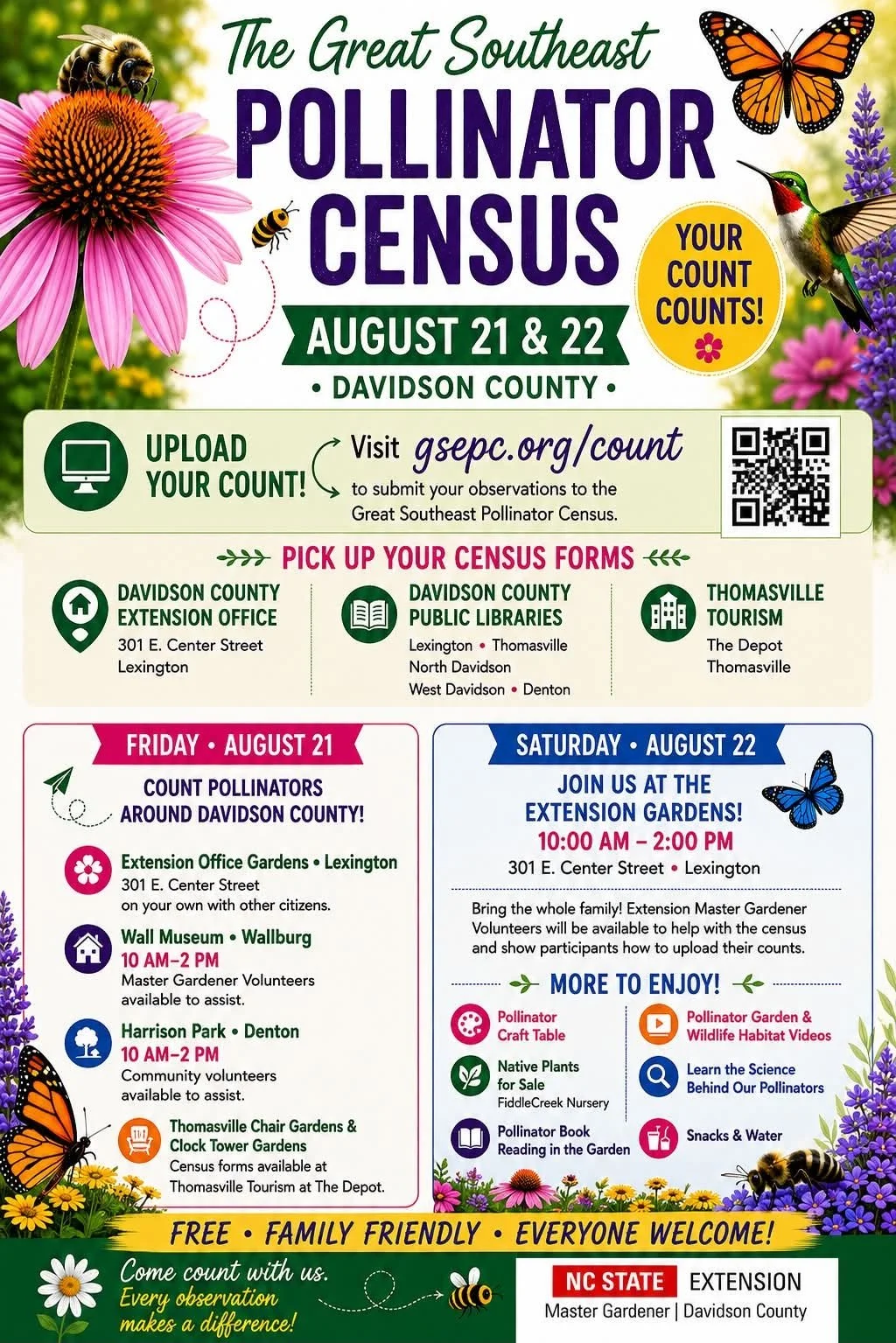
The Great Southeast Pollinator Census is taking place throughout Davidson County on August 21 & 22.
Community members can spend time observing flowers, counting the pollinators that visit, and submitting their observations to contribute to a larger regional citizen-science project.
You don't have to be a farmer, gardener, or scientist to participate!
Davidson County residents can count pollinators independently or participate at locations throughout the county.
On Saturday, the Davidson County Extension Gardens will also host a family-friendly event from 10:00 AM – 2:00 PM with Extension Master Gardener Volunteers available to help participants with the census and show them how to upload their counts.
Activities will also include educational resources, a pollinator craft table, native plants for sale, pollinator book reading, videos, snacks, and more.
🌼 Every observation contributes to a better understanding of the pollinators that help support our food system.
Want to participate? Census forms are available at several locations throughout Davidson County, or observations can be submitted online through the Great Southeast Pollinator Census.
👉 Learn More & Submit Your Pollinator Count
See the Great Southeast Pollinator Census flyer below for Davidson County locations, times, census form pickup locations, and additional details.
When a Crop Is Lost, the Expenses Aren't
One of the most important things to understand about crop loss is that losing the harvest doesn't erase what it cost to grow it.
By the time a crop is damaged or lost, a farmer may have already paid for:
Seeds or transplants
Fertilizer and soil amendments
Irrigation
Fuel
Equipment
Labor
Pest and disease management
Land expenses
Insurance
Packaging and supplies
Those expenses don't disappear when the crop does.
A farmer can lose the expected income from selling that crop while also losing the money already invested in producing it.
What Does Crop Loss Mean for Local Food Availability?
When you purchase local food, availability is directly connected to what's happening on local farms.
A crop failure or significant loss might mean:
Smaller harvests than originally expected
Limited quantities of certain products
A product suddenly becoming unavailable
A shorter growing season for a particular item
Delays while a farmer replants or waits for another crop
That's one reason local food availability can change from week to week.
When you're purchasing directly from local farms, you're experiencing agriculture in real time.
How Do Farmers Recover?
There isn't one answer.
If enough of the growing season remains, a farmer may be able to replant. Others might transition affected acreage to another crop, adjust production plans, or have to wait until the following growing season.
Depending on the farm and type of loss, assistance may also be available through crop insurance, disaster programs, emergency assistance, or agricultural organizations.
For farmers, knowing where to turn before and after a loss can make a major difference.
🌱 Resources for North Carolina Farmers
If your farm experiences crop damage or loss, you don't have to navigate the situation alone. The following state and federal resources can help producers prepare for, report, and recover from agricultural losses.
USDA Farm Service Agency — Disaster Assistance Programs
The USDA Farm Service Agency (FSA) administers several programs designed to assist agricultural producers following qualifying natural disasters and agricultural losses.
Depending on the situation, programs may address crop losses, livestock losses, damaged farmland, trees, and other agricultural impacts.
USDA Noninsured Crop Disaster Assistance Program (NAP)
Some crops aren't eligible for traditional federal crop insurance.
USDA's Noninsured Crop Disaster Assistance Program (NAP) provides financial assistance to eligible producers of certain noninsurable crops when qualifying natural disasters result in low yields, loss of inventory, or prevented planting.
Coverage generally needs to be obtained before the applicable deadline, making this an important program for producers to learn about before disaster strikes.
USDA Risk Management Agency — Crop Insurance
The USDA Risk Management Agency (RMA) oversees the Federal Crop Insurance Program.
Coverage varies depending on the commodity, location, and insurance plan. Different policies are available to help agricultural producers manage risks and protect their operations from qualifying losses.
NC State Extension
NC State Extension provides research-based information and local expertise for North Carolina agricultural producers.
Extension professionals can assist with crop production, plant diseases, pests, drought, soil management, farm planning, and other agricultural challenges. Farmers can also connect with their local Cooperative Extension office for assistance specific to their county and operation.
NC State Extension — Drought Resources
NC State Extension maintains resources specifically for North Carolina producers dealing with drought conditions.
Farmers can find drought monitoring information, current conditions, agricultural guidance, and resources for managing drought impacts.
N.C. Department of Agriculture & Consumer Services — Agricultural Disaster Programs
The N.C. Department of Agriculture & Consumer Services (NCDA&CS) provides information about agricultural disaster programs and other assistance available to North Carolina producers.
This is a particularly useful resource to check following major weather events or agricultural disasters affecting the state.
USDA Natural Resources Conservation Service — North Carolina
The Natural Resources Conservation Service (NRCS) provides technical assistance and, through qualifying programs, financial assistance to agricultural producers addressing natural resource concerns.
NRCS also provides information and assistance related to agricultural recovery following natural disasters.
USDA Farm Service Agency — North Carolina
North Carolina producers can use the state FSA website to find information about programs, deadlines, news, and assistance available through USDA.
Farmers can also use USDA's service-center resources to connect with the appropriate local office.
📸 If You Experience a Loss: Document It
If your farm experiences significant crop damage, document the loss as soon as it is safe to do so.
Consider:
Taking photographs and videos of the damage
Recording affected acreage
Keeping production records
Maintaining receipts and expense records
Documenting planting dates and expected production
Keeping records of weather or other conditions associated with the loss
If you participate in crop insurance or USDA programs, contact your crop insurance agent or local USDA Service Center promptly.
👉 Find Your Local USDA Service Center
Reporting requirements and deadlines vary by program, so don't wait to ask questions.
Most importantly, don't assume your farm isn't eligible for assistance. Talk with your local agricultural agencies and Extension professionals to determine what programs or resources may apply to your operation.
Understanding the Risk Behind Our Food
Crop loss is a reminder that agriculture doesn't happen in a controlled environment.
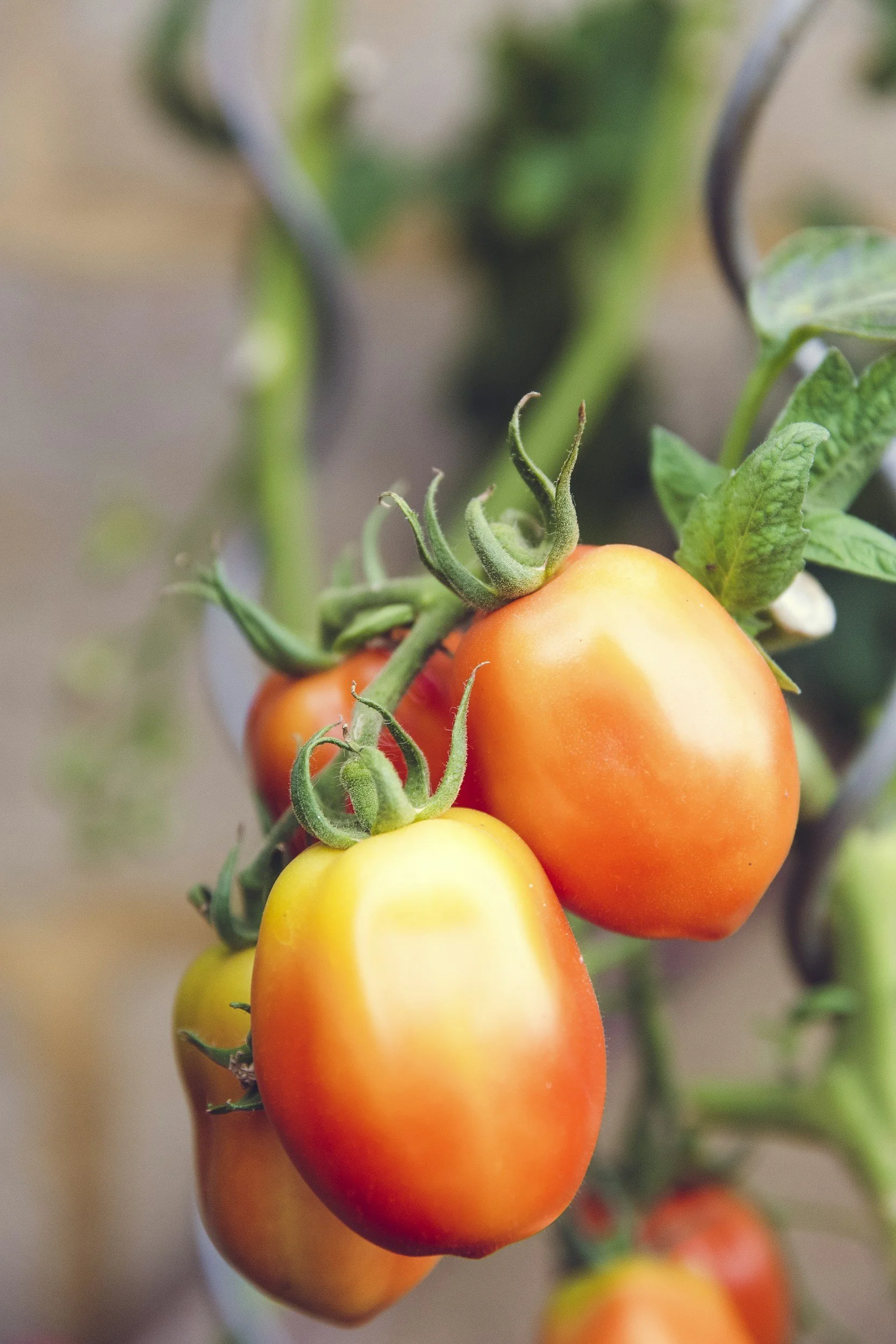
Every tomato, apple, head of lettuce, ear of corn, or other locally grown product represents months of planning, investment, labor — and risk.
Sometimes the weather cooperates. Sometimes pests appear. Sometimes disease spreads. And sometimes a farmer can do everything right and still lose part of a harvest.
Understanding those challenges gives us a better understanding of where our food comes from, why local availability changes, and the people working every day to keep our local food system growing.
Davidson County Local Food Network is committed to connecting our community with local agriculture, supporting local producers, and providing resources that strengthen our local food system.